WRITTEN BY: CAROLINE REEKIE
From a grandmother brand ambassador to AI ads trolling AI ads, the first months of 2026 have already set a high bar for brand campaigns.
If you thought January was going to be a slow month to kick off for marketing, think again. While most brands were still clearing out the mince pies and recovering from their Christmas ad budgets, a handful of campaigns came out swinging. Then came Super Bowl LX on February 8th, with 30-second slots fetching up to $10 million each, and the bar got higher still.
What did the best ones have in common? They were bold without being loud. They felt human in a year everyone is worried is going a little too machine. And they proved, once again, that a genuinely great idea beats a big budget every single time. So, grab a coffee (oat milk optional, debate encouraged), and let’s dive into the campaigns that have already defined 2026.
Heinz: The 75-Year-Old Problem Nobody Thought to Fix 🍟
Date: January 2026
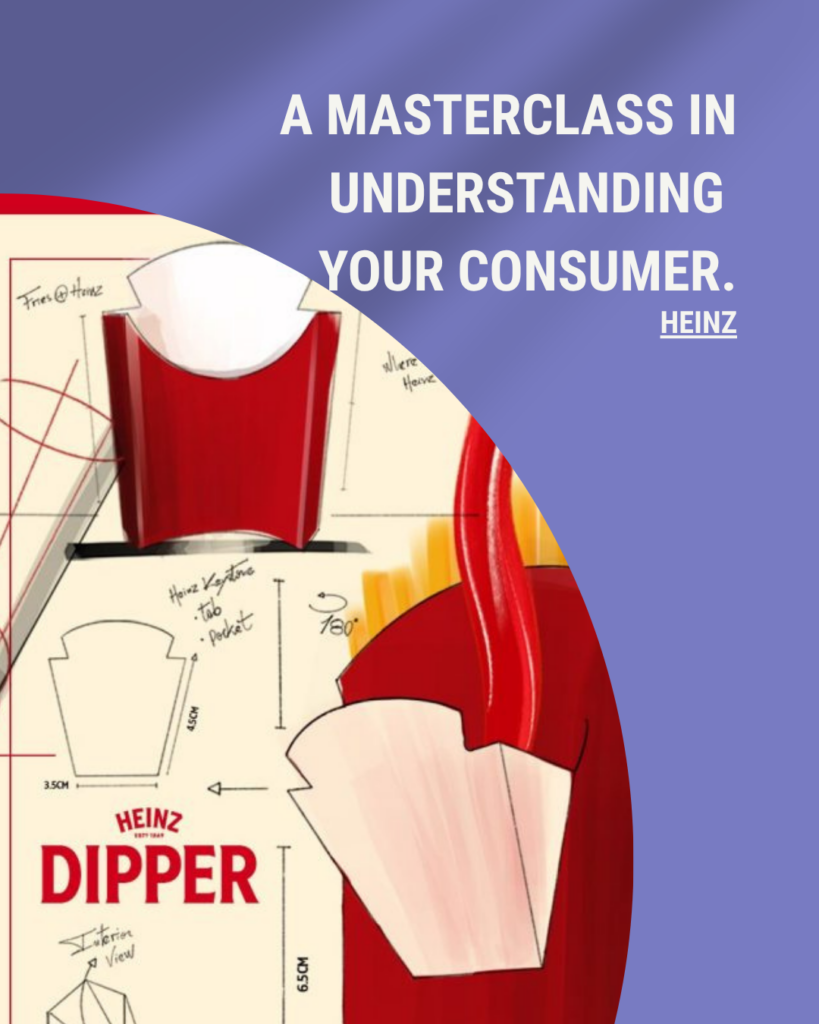
After 75 years of the same fry box design, Heinz and agency Rethink did something deceptively simple: they asked why the fry box had no dedicated space for ketchup. The answer, apparently, is that nobody had ever bothered to change it. So they did. The redesigned box features a clever built-in ketchup tray, so your fries and sauce finally live in harmony. The campaign leaned into the absurdity of the wait, asking with barely concealed cheek: what took so long?
Why it worked: Heinz didn’t need a celebrity. They didn’t need a stunt. They spotted a universal, everyday frustration that everyone has experienced but nobody had named, and they owned the solution. The product IS the campaign. It also slots neatly into Heinz’s long-running brand truth: ketchup goes on everything, and it should be easier to use.What you can steal: Look at your product’s most annoying friction point. Not the one you think customers notice, the one they actually complain about in reviews and Reddit threads. Solving it publicly, and making a marketing moment out of solving it, is more powerful than any ad that just tells people you’re great.
Jacquemus: The Most Unexpected Brand Ambassador of the Year 👩🦳
Date: January 2026
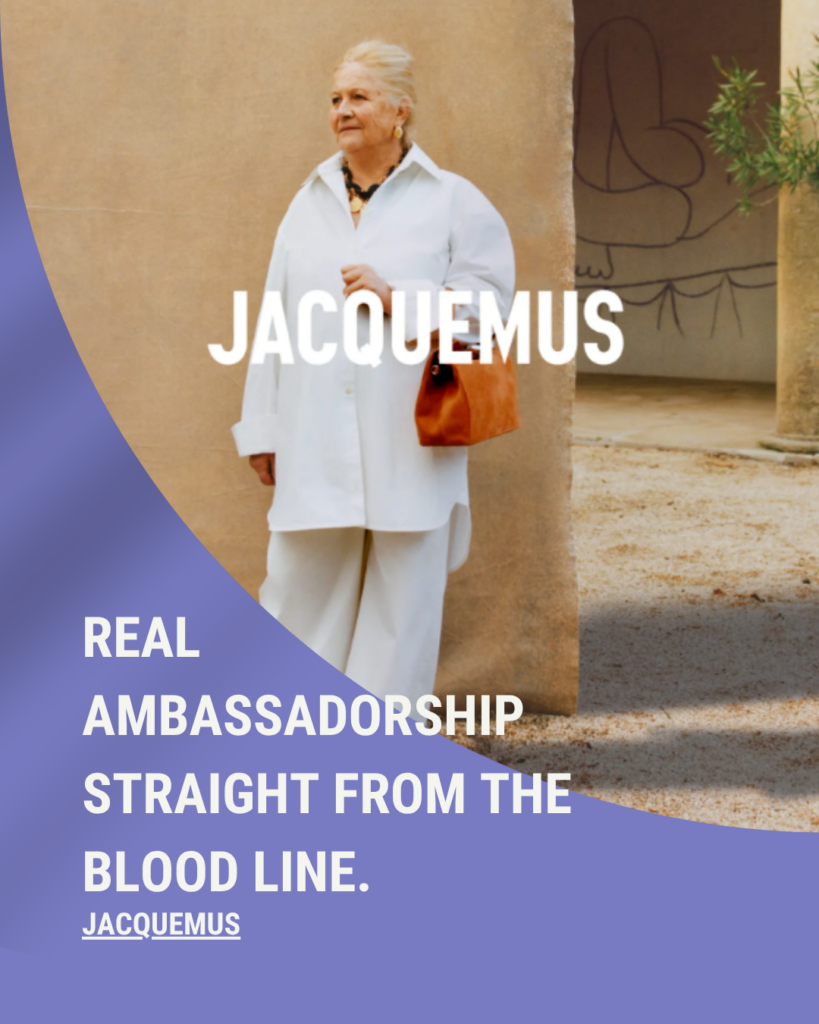
While every other luxury brand was busy hunting for a celebrity or a supermodel, Jacquemus zigged wildly. They appointed their first-ever brand ambassador, and it is founder Simon Porte Jacquemus’s own grandmother, Liline. The announcement came with a full faux contract, styled with the same laconic wit the brand is known for. Liline becomes the face of a brand whose whole identity is built on sun-drenched personal nostalgia and Southern French warmth. It is, in retrospect, completely obvious. Nothing is more Jacquemus than this.
Why it worked: Authenticity at this level is almost impossible to manufacture. Liline is not playing a grandmother archetype for effect; she is the real origin story of the brand, given a starring role. At a time when luxury marketing is swamped with the same rotation of famous faces, this felt genuinely personal and genuinely different. It also generated enormous press for essentially zero casting fee.What you can steal: Who is the real human heart of your brand? Not the polished spokesperson, not the CEO doing a LinkedIn post, but the person or story that explains why the brand exists. That story, told honestly, is often more compelling than anything money can buy.
Stella Artois: When the Weather Becomes Your Media Buy ❄️🍺
Date: January 2026
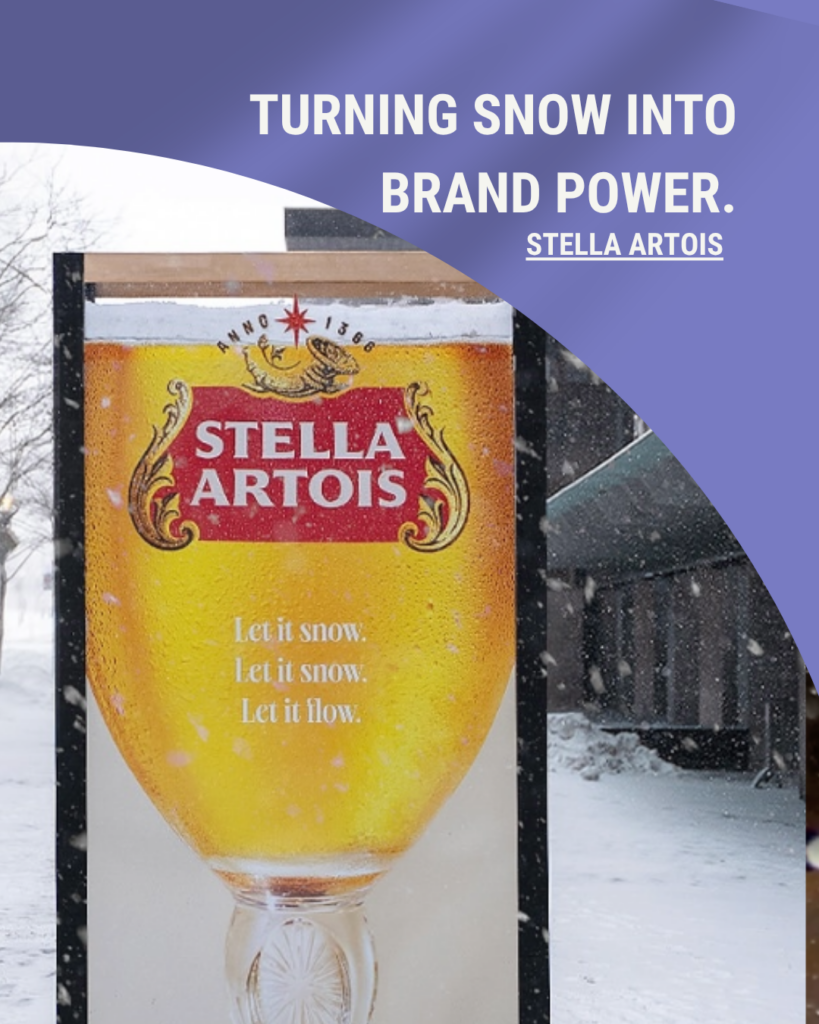
As record snowfall hit Toronto, Stella Artois didn’t scramble to protect their outdoor campaign. They celebrated it. Their billboard, already featuring an oversized Stella chalice, was perfectly positioned so that falling snow appeared to fill the glass and spill over the rim like frothy beer foam. Nobody engineered the weather. They just built a billboard ready to make magic when conditions aligned, and then let the internet do the rest.
Why it worked: It felt like a gift from the universe, and everyone loves those. Real-time, reactive marketing is nothing new, but this one worked because the visual gag was so perfectly executed that it looked planned even though it wasn’t entirely. The brand had the creative foresight to set the stage; winter did the rest. It was also genuinely shareable in the purest sense: people shared it because it made them smile, not because a brand asked them to.What you can steal: Think about the environmental or seasonal conditions your outdoor media might encounter. A billboard designed to look brilliant on a grey, rainy London day hits differently to one designed for sunshine. Build with context in mind, and you might just get lucky.
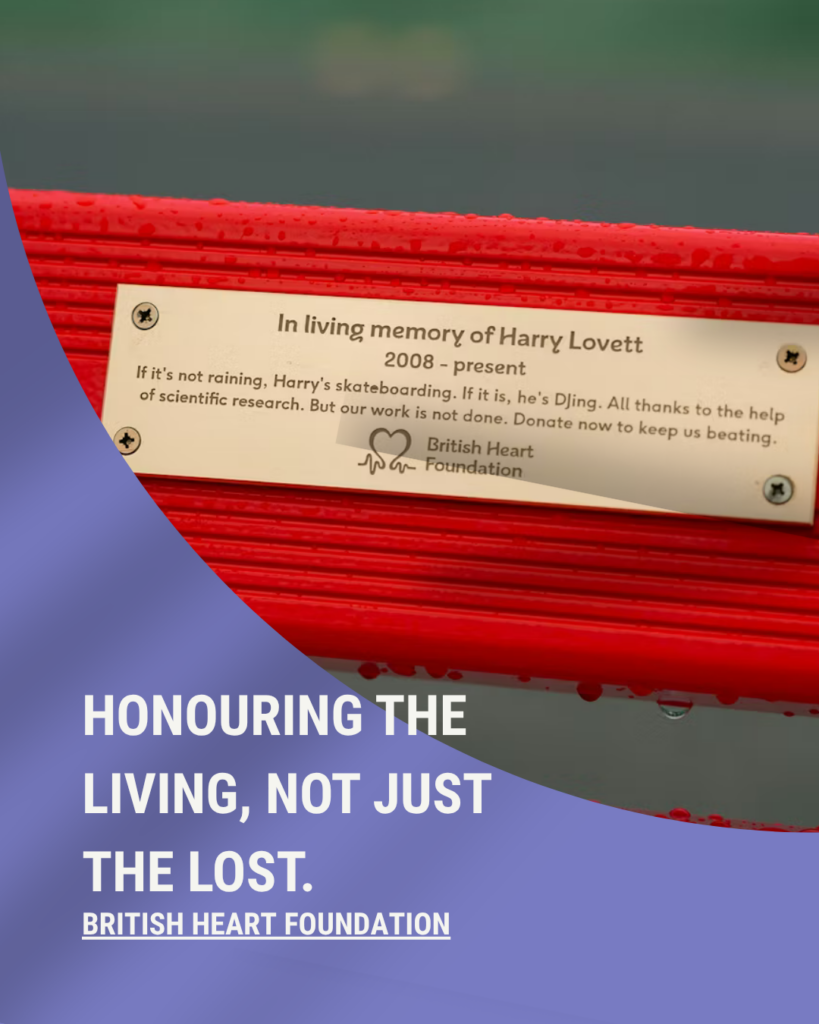
British Heart Foundation: Honouring the Living, Not the Lost ❤️
Date: January 2026
Charity advertising often works the same way: show you the tragedy, show you the need, ask you to give. The British Heart Foundation and Saatchi & Saatchi flipped the script entirely with “In Living Memory.” Instead of memorials for those lost to heart disease, the campaign installed red benches across the UK, each honouring a survivor saved by BHF-funded research. Each bench carries a real story, a real name, and a reminder that the charity’s work is measured not just in loss but in lives continued.
Why it worked: It reframes what the BHF actually is: not just a charity you donate to when something terrible happens, but the reason something terrible didn’t happen. The physical installation gave journalists and the public something tactile to engage with. The emotional pivot from grief to gratitude is genuinely rare in this sector, and it landed.What you can steal: What is the positive case for your brand that you have been underselling? Most brands lead with the problem they solve; fewer lead with the joy of the outcome. If you can show the world what life looks like because you exist, that is a more compelling story than the one about the problem you fix.
Google Gemini: The Super Bowl’s Emotional Gut Punch 🏠
Date: February 8, 2026 (Super Bowl LX)
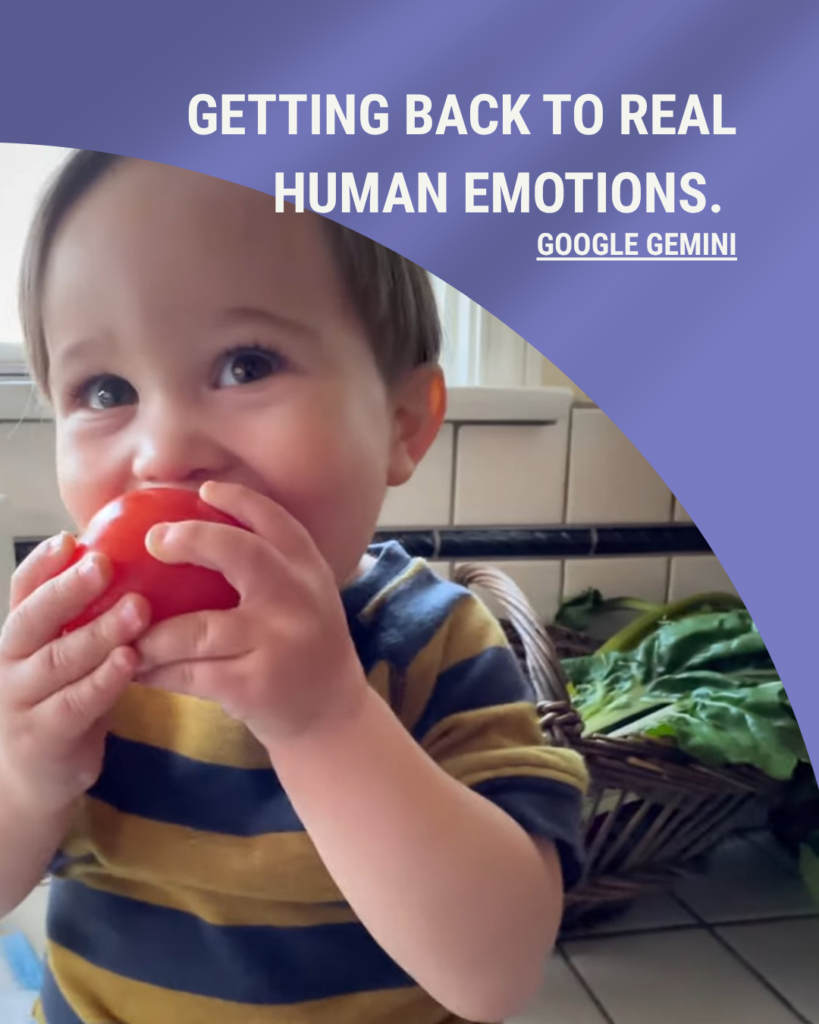
There were seven AI-brand ads at Super Bowl LX, and most of them were shouting about features. Google Gemini whispered instead. The ad, titled “New Home,” showed a mum and her young son using the Gemini app to visualise their new house with a fresh coat of paint, a redesigned garden, and a sense of possibility. It was warm. It was quiet. It had an adorable baby, a loyal family dog, and the unmistakable feeling of a new beginning. Northwestern University’s Kellogg School of Management ranked it the best Super Bowl ad of the year, and it’s easy to see why.
Why it worked: While its competitors were explaining what AI can do, Google showed what AI can feel like. The ad didn’t mention a single technical specification. It didn’t compare itself to anything. It just placed a genuinely useful, genuinely human product into a moment everyone could relate to, a family making somewhere new feel like home. In a sea of AI noise, emotional restraint was the most disruptive choice Google could have made.
What you can steal: When your product category is loud and competitive, the bravest move is often to be quieter than everyone else. Lead with the human moment that your product enables. The feature is just the means; the feeling is the point.Video Ad: New Home | Google Gemini SB Commercial 2026
Anthropic (Claude): The Ad That Trolled Its Own Industry 🤖
Date: February 8, 2026 (Super Bowl LX)
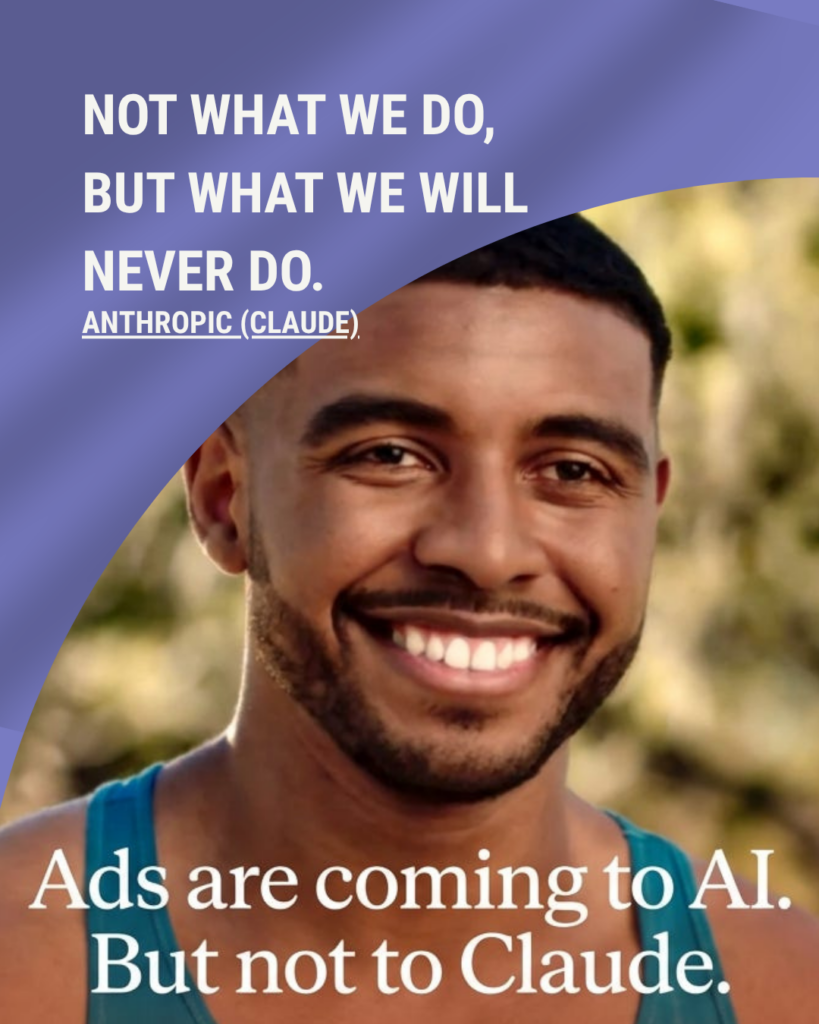
Anthropic‘s first-ever Super Bowl commercial might be the most meta thing that aired all night. In the spot, a young man asks the personification of an AI chatbot for help with his workout. The chatbot tries to sell him some shoes he doesn’t want. The punchline: “Ads are coming to AI. But not to Claude.” At the same Super Bowl where AI brands were spending tens of millions of dollars on advertising, Anthropic ran an ad about how its AI doesn’t show ads. The resulting press coverage did a lot of the work for them.
Why it worked: It positioned Claude as the honest outsider in a category everyone is already slightly suspicious of. The joke works on multiple levels: it is self-aware, it is relevant to a real consumer anxiety (will AI start serving me ads?), and it gives Claude a clear, differentiated identity at a moment when most AI brands still feel interchangeable. Kellogg’s panel gave it strong marks specifically for message clarity.
What you can steal: Know what your competitors are doing, and know where the gap is. If everyone in your category is making the same kind of claim, the most powerful thing you can do is say the opposite thing honestly. Clarity of positioning is worth more than production value.Video Ad: Can I get a six pack quickly?
Squarespace: A 30-Second Lanthimos Film (That Sold Websites) 🎬
Date: February 8, 2026 (Super Bowl LX)
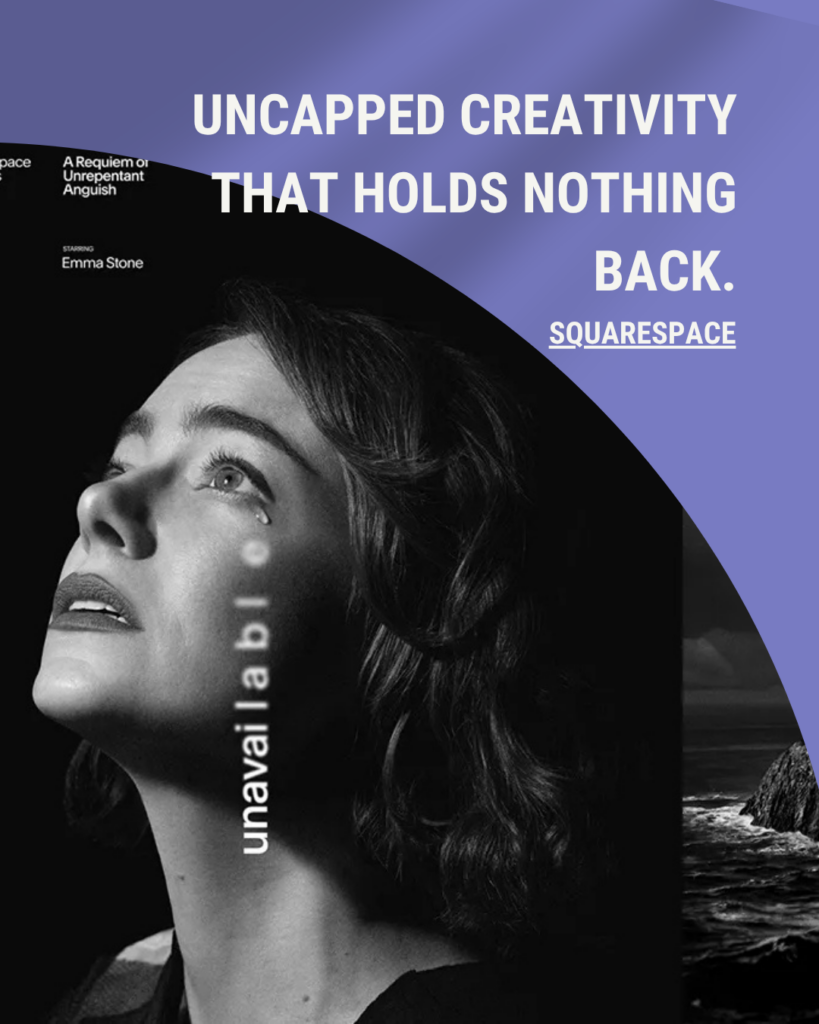
Squarespace reunited director Yorgos Lanthimos (Poor Things, The Favourite) with Oscar winner Emma Stone for a 30-second spot in which Stone descends into spiralling existential horror because someone else has registered emmastone.com. It is unsettling, darkly funny, and unmistakably Lanthimosian. It also communicates the product message with total clarity: if you want your domain, get it before someone else does.
Why it worked: Squarespace has consistently bet on high creative ambition, and here they resisted the temptation to water it down for a mass Super Bowl audience. The result is an ad that respects the viewer’s intelligence, commits fully to its own bizarre logic, and earns genuine admiration. Emma Stone throwing a full-tilt on-brand fit over a URL is precisely the kind of image that travels.
What you can steal: Find the creative collaborators who genuinely fit your brand, not just whoever is available or famous. When a partnership feels organically right (as Stone-Lanthimos-Squarespace does), it shows. Don’t water down the creative vision to make it feel safer. Safe is forgettable.Video Ad: Squarespace Super Bowl Commercial 2026 Emma Stone Big Game LX Ad
Cheat Sheet: Scale Up, Stand Out 💭
- 1) Fix the friction: Heinz’s redesigned fry box proved that solving a small, universal annoyance is a campaign in itself.
- 2) Build for the moment: Stella Artois’s snow stunt shows what happens when you design with context in mind, not just content.
- 3) Find your real story: Jacquemus proved that the most authentic ambassador might already be in your family.
- 4) Flip the emotional frame: BHF’s In Living Memory shows the power of leading with hope rather than fear or loss.
- 5) Let the human moment lead: Google Gemini won the Super Bowl not with tech specs but with a quiet family feeling.
- 6) Own the gap: Anthropic turned its competitors’ biggest advertising day into proof of its own differentiator.
- 7) Commit to the creative: Squarespace and Lanthimos remind us that great work gets remembered because nobody blinked.
The common thread across all of these? Clarity. Every brand on this list knew exactly who they were, knew exactly what they wanted to say, and said it with enough conviction to cut through. Whether your budget is eight million dollars or eight hundred, that formula does not change.
2026 is only getting started. Buckle up!
Sources 🧾
- Famous Campaigns (January 30, 2026). 20 of the Best Campaigns from January 2026.
- CBS News (February 9, 2026). Best and Worst Super Bowl Commercials of 2026 as Rated by Experts. Includes Kellogg School of Management ranking data.
- Adweek (February 8, 2026). The 10 Best Super Bowl Ads of 2026.
- CNBC (February 8, 2026). Super Bowl 60 Ads and News Live Updates. NBC sold out of Super Bowl LX ad inventory at an average of $8 million per 30-second spot.
- EDO Ad EnGager (February 2026). Top 2026 Super Bowl Ads Ranked. Engagement Index data including Lay’s (7.1x median), ai.com (9.1x median), and Dunkin’ (5x median).
- NPR (February 9, 2026). These 2026 Super Bowl Commercials Stood Out.

BE THE FIRST TO COMMENT: